

San Diego Surf Boys Program College Resources
Welcome to San Diego Surf’s Boys College Corner, your central hub for navigating the collegiate recruiting landscape. We’ve lined up the best resources, tools, and insider tips to help you navigate the process and find the perfect fit at the next level.
If you have any questions about the process, please reach out to our Boys College Liaison, Ryan Guy: boyscollegeliaison@surfsoccer.
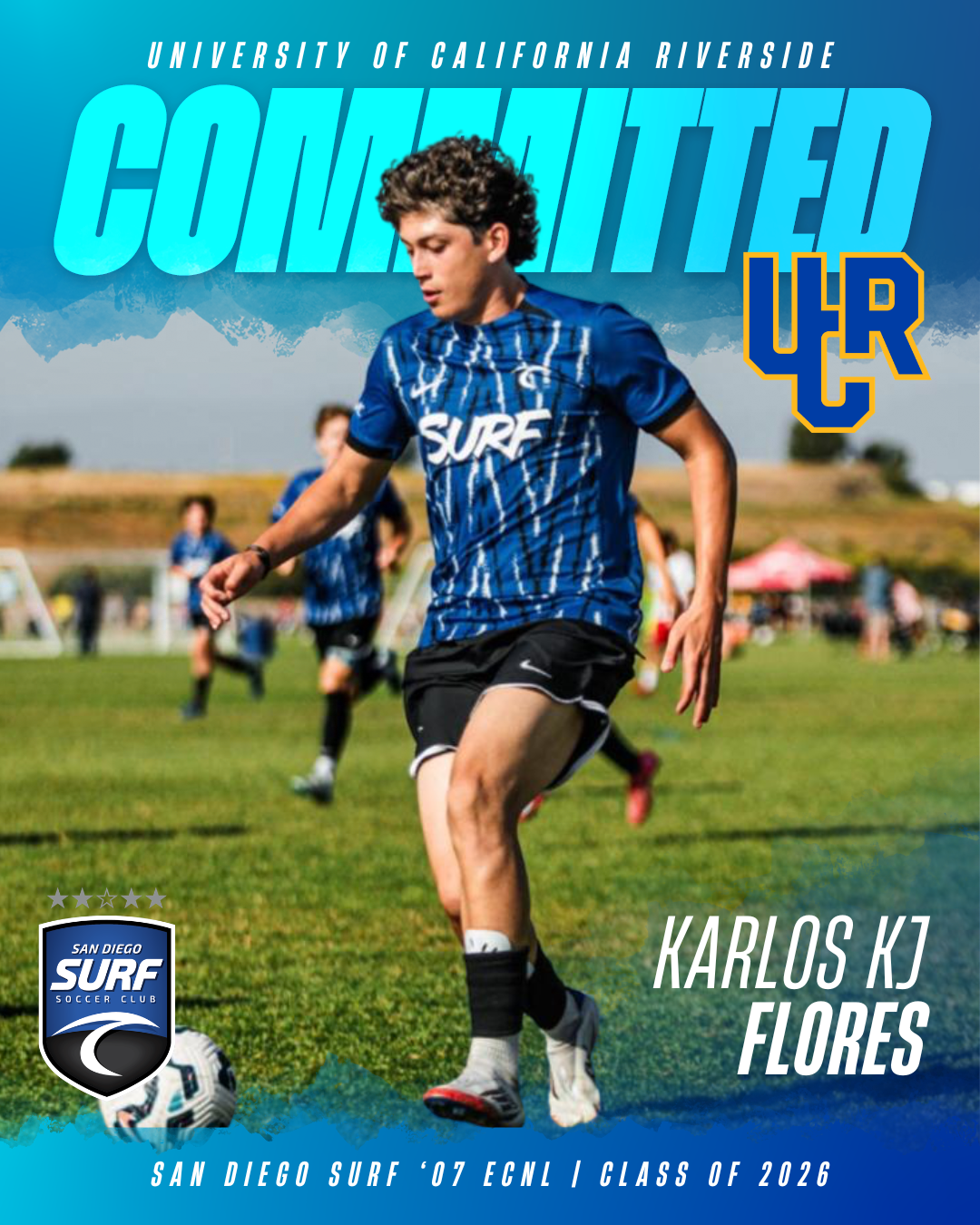
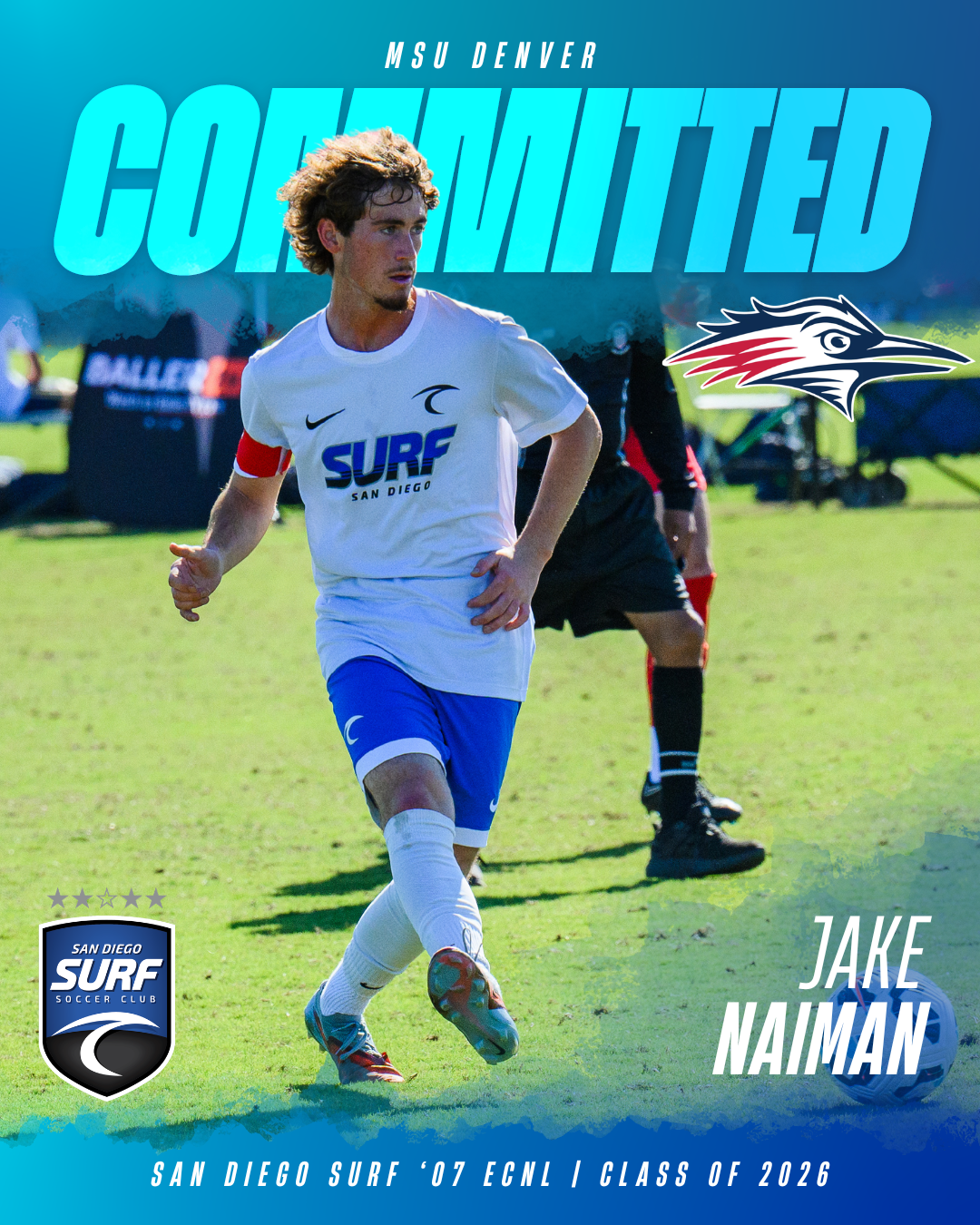
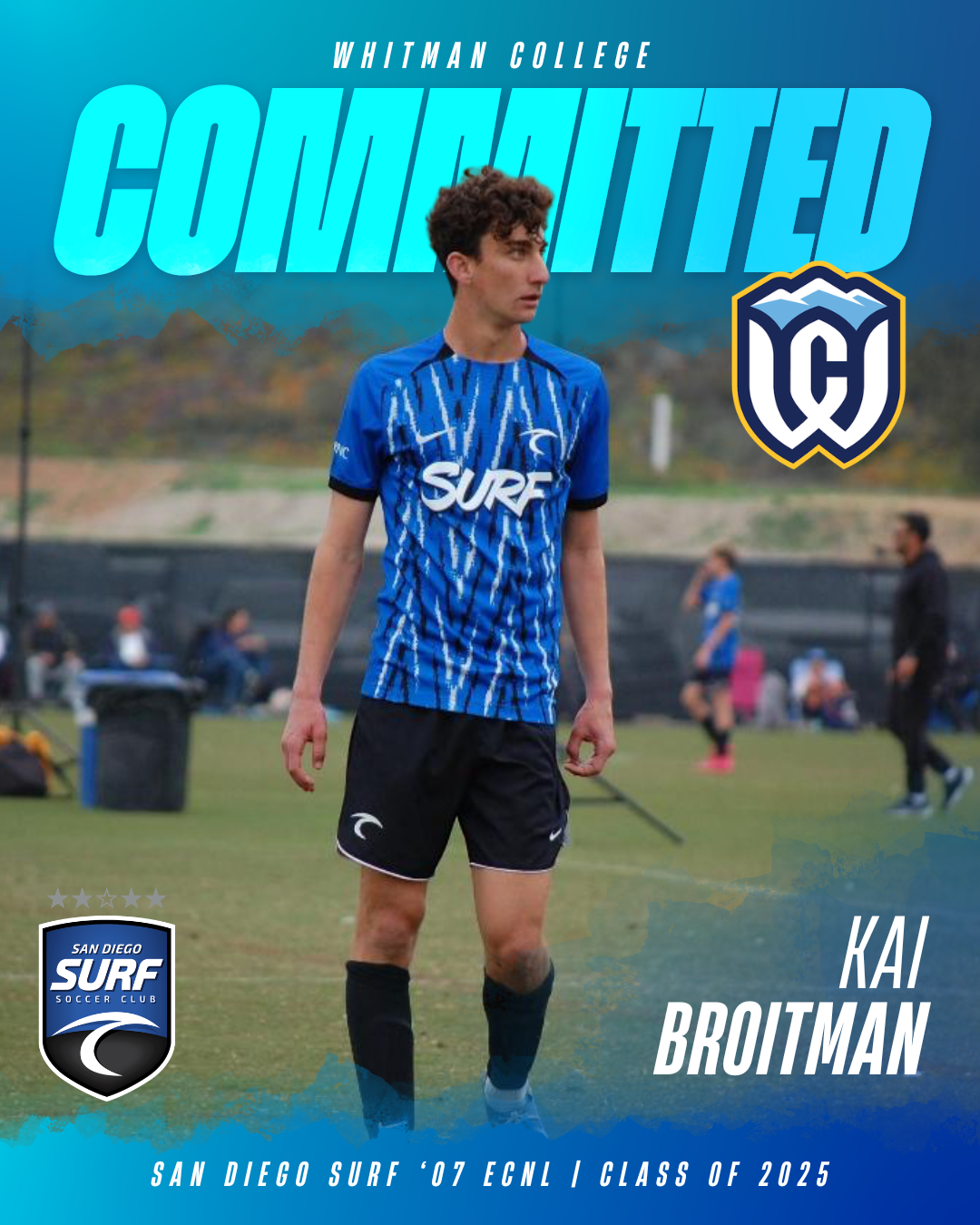
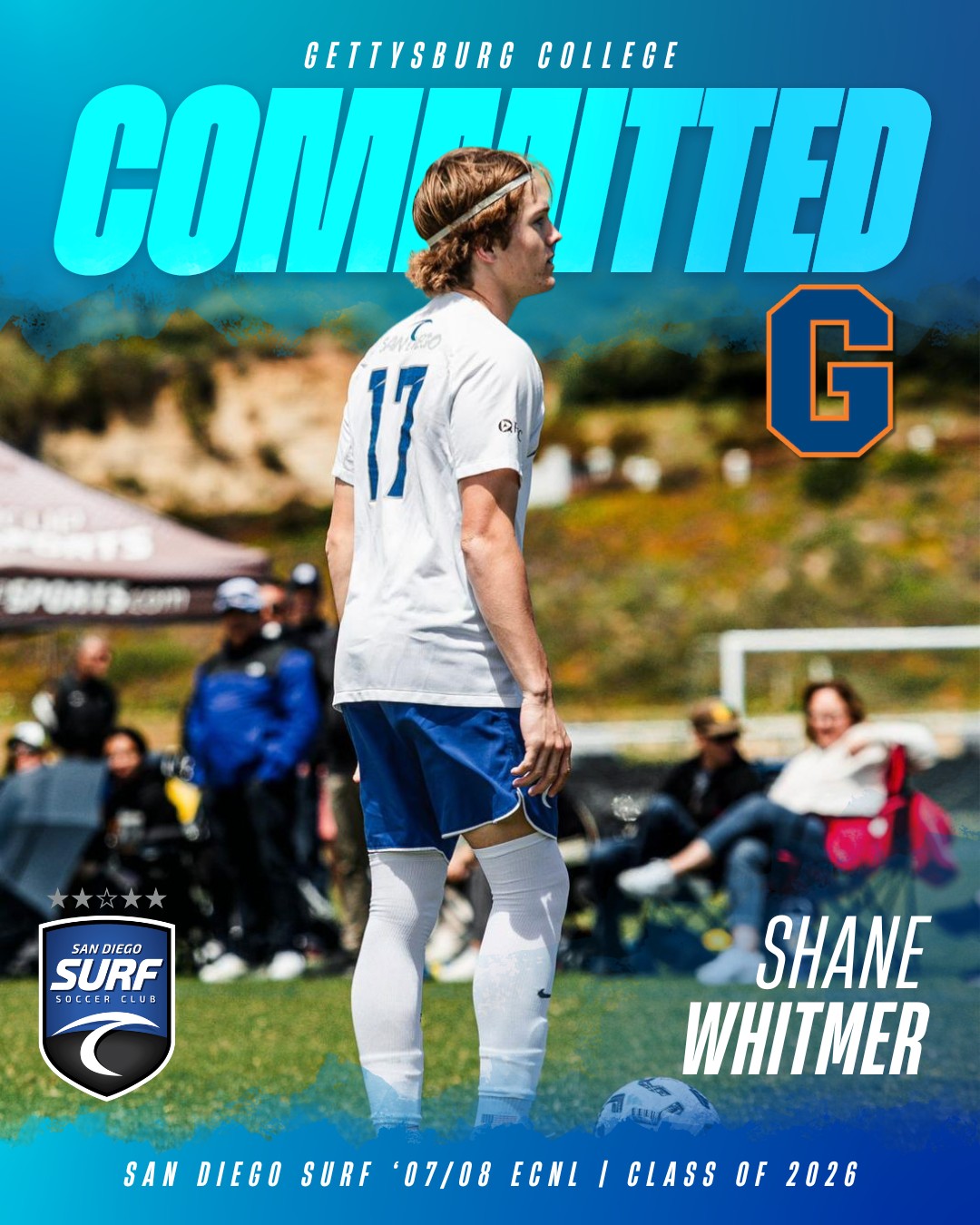
Boys College Program Links
Please fill out the forms below to join or continue with our Surf Boys College Program.
Downloadable Resources
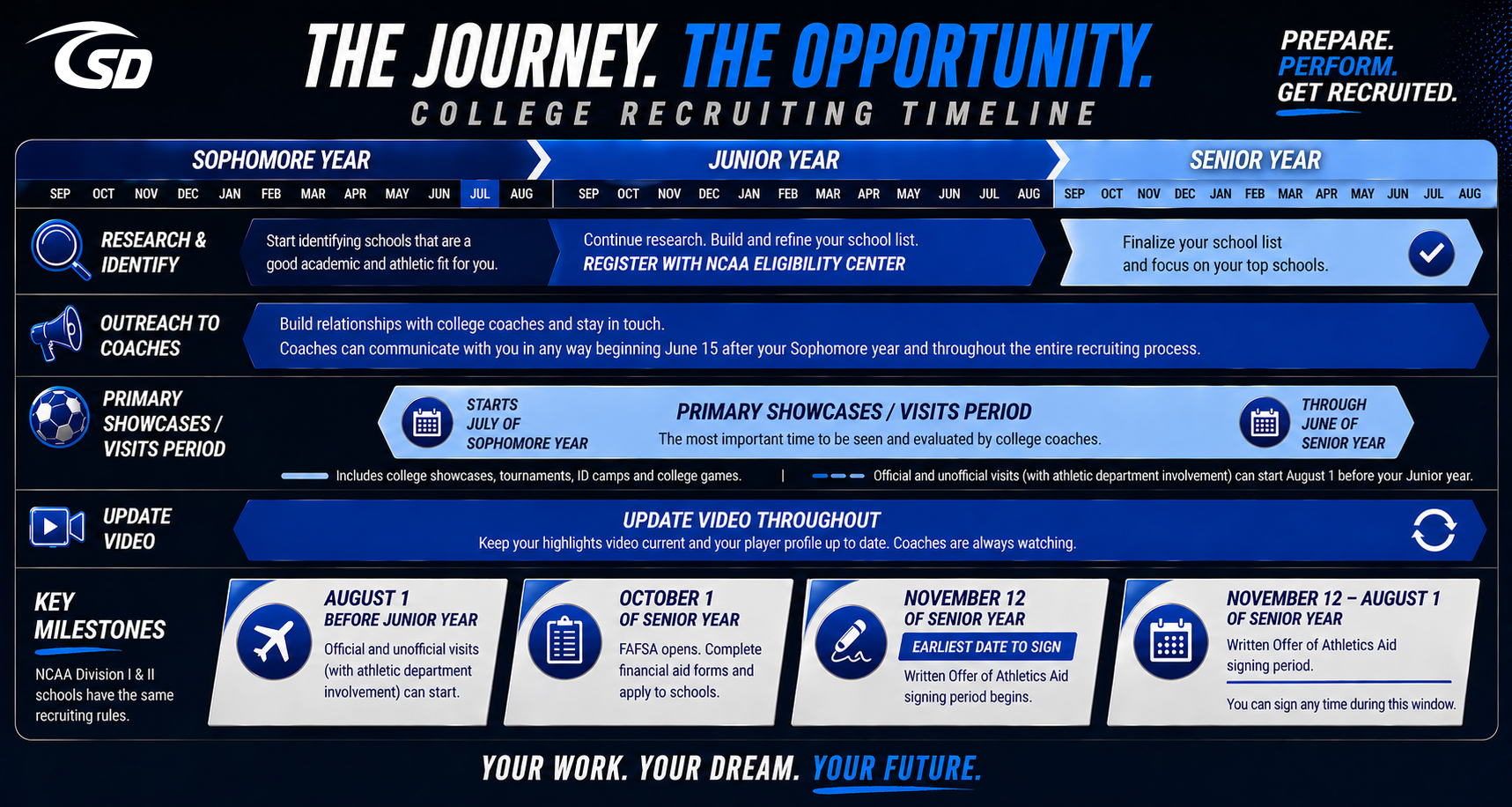
College Recruitment Timeline
Frequently Asked Questions
1. When should boys realistically begin the college recruiting process?
For most boys, the process should begin during sophomore year, with more serious organization and outreach beginning toward the end of sophomore year and into junior year. While some elite-level players are identified earlier, the majority of boys’ recruiting occurs much later than many families expect.
2. When should players start emailing college coaches?
Players can begin introducing themselves and building communication during sophomore year, but consistent and targeted outreach usually becomes most important during junior year, particularly leading into showcases and tournament events.
3. Are emails enough, or should players be building actual relationships with college coaches?
Emails are important for introducing yourself and staying organized, but real recruiting relationships are built through consistent communication over time. Players should aim to build genuine connections with coaches through follow-up conversations, phone calls, campus visits, ID camps, and continued communication throughout the recruiting process. The players who stand out are often the ones who communicate professionally, consistently, and personally over an extended period of time.
Emails are important for introducing yourself and staying organized, but real recruiting relationships are built through consistent communication over time. Players should aim to build genuine connections with coaches through follow-up conversations, phone calls, campus visits, ID camps, and continued communication throughout the recruiting process. The players who stand out are often the ones who communicate professionally, consistently, and personally over an extended period of time.
4. How important are highlight videos, and how long should they be?
Highlight videos are extremely important in the modern recruiting landscape. A player’s primary highlight video should generally be around 3 minutes long and focus on quality actions rather than quantity. Coaches want to quickly evaluate decision-making, athleticism, technical ability, and soccer IQ.
5. When can college coaches begin directly communicating with players?
For NCAA Division I and II programs, direct communication with players generally begins June 15 following the player’s sophomore year of high school. Division III, NAIA, and Junior Colleges often have different timelines and may communicate earlier.
6. What level of soccer is realistic for my son?
This depends on a combination of ability, athleticism, academics, physical development, position, and long-term growth potential. Families should remain open-minded throughout the process, as many players ultimately find the best fit at a level different than what they originally expected.
7. How many schools should players realistically contact?
Most players should build a list of approximately 20-30 schools that realistically fit their athletic, academic, and financial goals. The process should focus on building meaningful communication rather than mass emailing programs.
8. What showcases and events matter most for college recruiting?
College coaches primarily recruit at high-level league events, national showcases, tournaments, and ID camps that align with their recruiting needs. Consistent performance across multiple events is usually more important than one standout weekend.
9. How important are academics and GPA in the recruiting process?
Academics are extremely important. GPA, course rigor, and test scores can significantly impact recruiting opportunities, admissions, scholarship potential, and coach interest. Strong academics often create more options and flexibility throughout the process.
10. What are the alternatives if a player is not recruited directly out of high school?
There are many successful pathways outside of direct four-year recruitment, including Junior College soccer, prep schools, gap year programs, and continuing development within club soccer. Players develop at different rates, and many successful college players take alternative pathways before reaching their final destination.